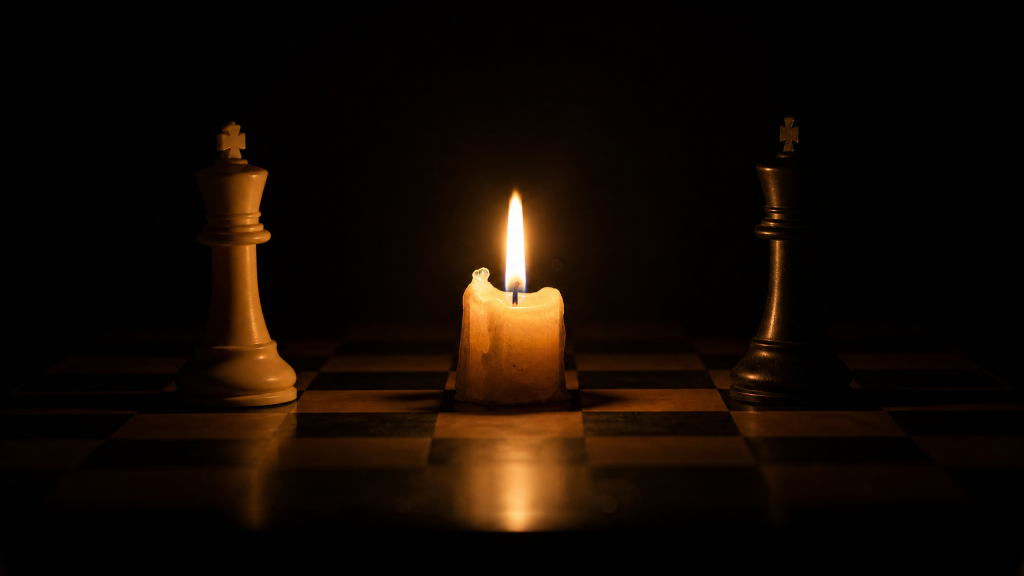
The believer and the skeptic ask the same question from opposite directions.
The believer asks whether the faith is true. The skeptic asks whether there is anything to have faith in. Both are asking whether there is something underneath the visible world that holds, something that does not depend on whether things are going well, something that remains when the structure of ordinary life is removed.
I have spent time on both sides of that question and a long time in the middle, and what I have found is that the honest position for most people is not certainty in either direction. It is a kind of functional faith, a decision to live as though something holds, not because you have proven it but because the alternative, living as though nothing holds, produces a kind of person you do not want to be.
The skeptic who is honest about their skepticism will admit that they also live by faith. They have faith that the next breath will come, that the people they love will still be there tomorrow, that the work they are doing matters in some way that extends beyond their own survival. None of that is provable. All of it is lived as though it is true.
The believer who is honest about their belief will admit that it is not certainty. It is a decision, made again each morning, to orient toward something that cannot be fully seen.
What both of them share, underneath the argument, is the need for something that holds. The question is not whether you need it. The question is what you will build your life on, knowing that the ground moves and the structure will be tested and the thing that holds will have to hold when nothing else does.
That is the question worth sitting with. Not which side of the argument you are on, but what you are actually building on, and whether it will hold when it is required to.