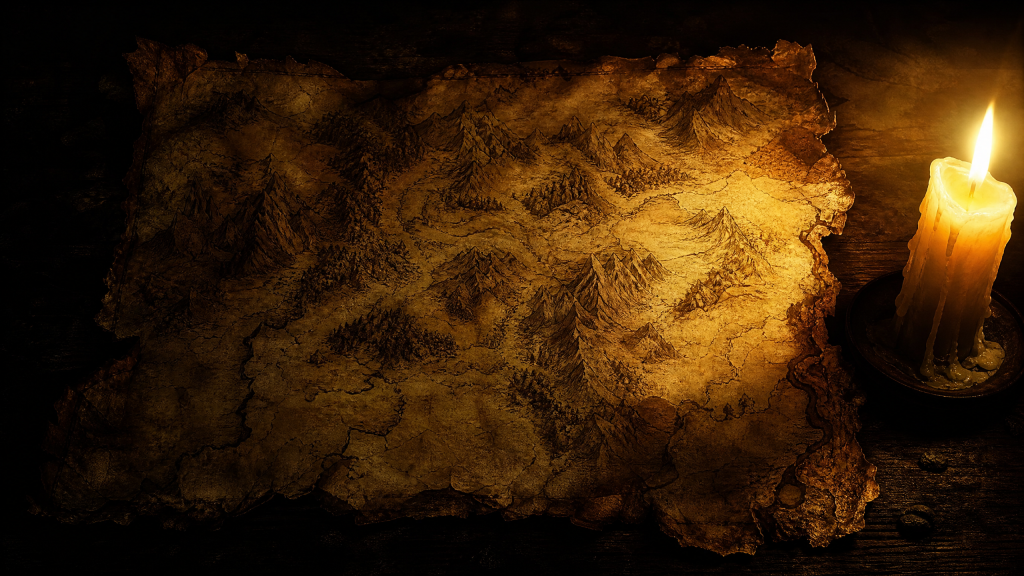
Hard years have a geography.
I have been through enough of them, and been near enough people going through them, to say that with some confidence. They are not random. They have a shape. There is an entry point, a middle that feels like it will never end, and an exit that does not look like what you expected when you went in.
The entry point is usually a loss of some kind. A business failure, a relationship ending, a death, a betrayal, a diagnosis. Something that removes a structure you were relying on without knowing you were relying on it. The ground shifts, and you discover that what you thought was solid was load-bearing in ways you had not mapped.
The middle is the part that breaks most people, not because it is the hardest part, but because it feels permanent. In the middle of a hard year, the middle feels like the rest of your life. The capacity to imagine a different future contracts. You can see clearly how you got here and you cannot see at all how you get out, and the combination of those two things produces a specific kind of despair that is different from grief and different from fear.
The exit does not look like what you expected. This is the part that is hardest to communicate to someone still in the middle. The exit is not a return to what was before. The furnace has changed the terrain. What you exit into is not the life you had before the hard year. It is a different life, built on different ground, with a different understanding of what is load-bearing and what is not.
Knowing the map does not make the terrain easier. But it makes it survivable. It makes it possible to say, in the middle, this is the middle, not the end, and the exit exists even though I cannot see it from here.
That is enough. Sometimes that is everything.